
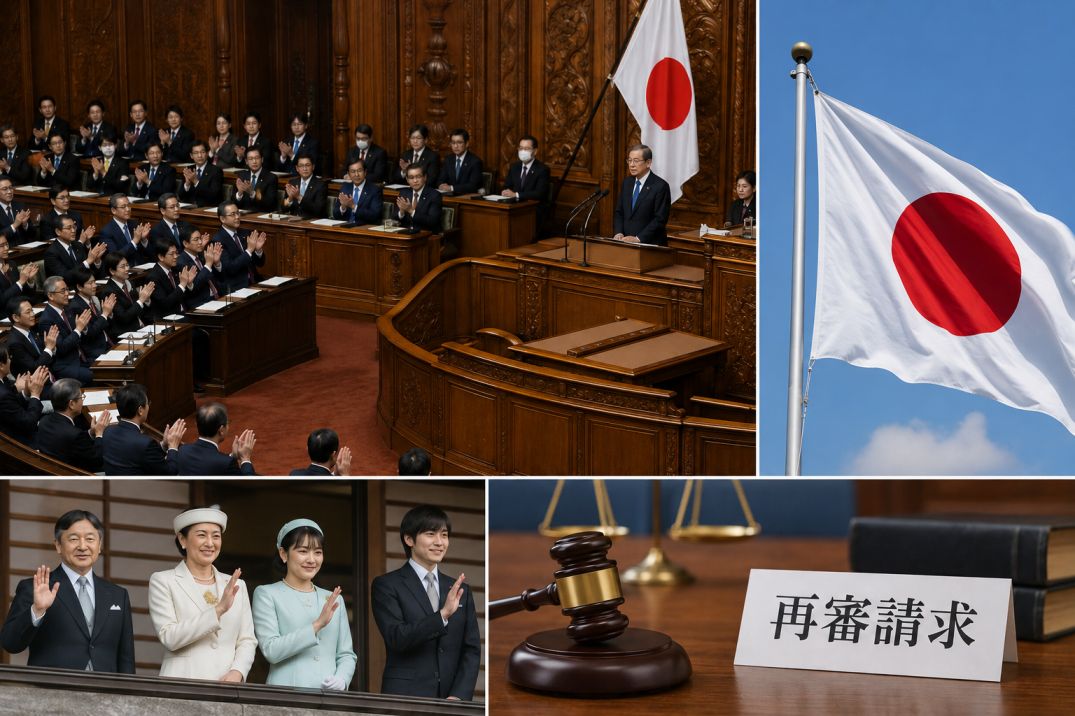
Japan’s parliament has enacted three significant pieces of legislation, marking a pivotal shift in various legal areas. Among these is a historic revision of the Imperial House Law, which had remained unchanged since 1947. This amendment now allows female members of the imperial family to maintain their royal status post-marriage and permits the adoption of male heirs from former imperial branches. The change aims to bolster the continuity of the imperial lineage.
Additionally, legislators have passed a law that criminalizes the public desecration of the national flag, a move that has sparked a mix of support and criticism. Under this new law, individuals found guilty could face up to two years of imprisonment or be fined 200,000 yen. Proponents argue that this measure is essential for safeguarding national symbols, while opponents express concern over potential implications for freedom of expression.
Parliament also addressed the nation’s judicial procedures by approving reforms intended to expedite the criminal retrial process. These changes aim to minimize delays in the review of wrongful conviction cases. However, the reforms have faced opposition, with several parties criticizing them for insufficiently enhancing transparency and the disclosure of evidence.
The adjustment to the Imperial House Law is particularly noteworthy, given its potential impact on the future of Japan’s imperial family, where succession issues have been a topic of longstanding debate. By allowing female royals to retain their titles after marriage, the law seeks to modernize the imperial succession system, which has traditionally been male-dominated.
Meanwhile, the new flag desecration law reflects broader discussions about national identity and respect for cultural symbols. While supporters see it as a necessary step to honor national emblems, critics worry about the broader implications for civil liberties. The criminal retrial reforms, although a step forward in addressing judicial inefficiencies, have yet to fully satisfy demands for a more transparent and fair justice system.