
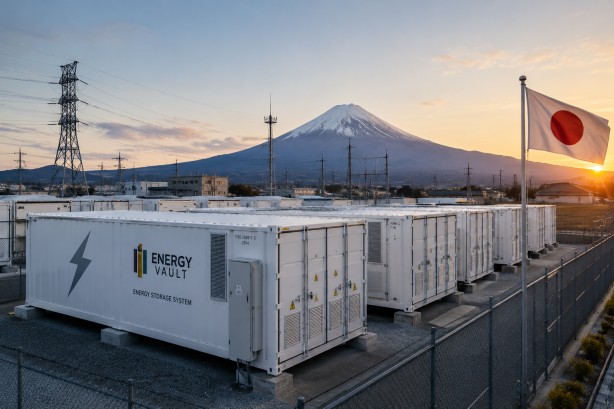
The market for Battery Energy Storage Systems (BESS) in Japan is experiencing a significant surge as both international and domestic players embark on large-scale energy storage projects. This growth is driven by a combination of increasing renewable energy production, challenges related to solar power curtailment, and difficulties in grid connection. These factors are collectively boosting the demand for standalone battery storage solutions across the nation.
Government policies, alongside long-term revenue strategies and rising investments in utility-scale storage, are supporting this expansion. Major projects underway include Energy Vault’s acquisition of an 850 MW BESS portfolio and Neoen’s development of a 100 MW/400 MWh battery project in Hyogo Prefecture. Additionally, Japanese companies such as Mitsubishi Estate, Itochu Corporation, and Tokyo Century are heavily investing in large-scale storage, with PowerX contributing a 230.1 MWh battery system for a project located in Fukuoka Prefecture.
Further developments in regions like Gunma, Niigata, and Kyushu indicate a growing confidence in Japan’s energy storage industry. The sector is benefitting from government incentives, long-term decarbonization auctions, and policies aimed at enhancing grid reliability and integrating renewable energy sources. These initiatives are critical as Japan works towards strengthening its energy infrastructure and supporting the broader adoption of renewable technologies.
With Japan’s solar capacity on the rise and a national goal to increase the share of renewables in electricity generation by 2040, the demand for battery storage is expected to accelerate further. While lithium-ion batteries dominate the current landscape, the country is actively striving to balance the creation of competitive battery supply chains with efforts to enhance its domestic energy storage capabilities and ensure grid resilience.
Legal Disclaimer: The information contained in this article has been provided by independent third-party contributors, clients, or content partners. We do not independently verify the accuracy, completeness, legality, ownership, licensing, or reliability of submitted content, including text, images, videos, trademarks, or other media materials. The submitting party is solely responsible for ensuring that all content, including images and media assets, complies with applicable copyright, trademark, licensing, and intellectual property laws. We disclaim liability for any unauthorized use of copyrighted or proprietary materials by third parties. If you believe that any content published on this platform infringes your intellectual property rights, kindly contact the author above for prompt review and resolution.