
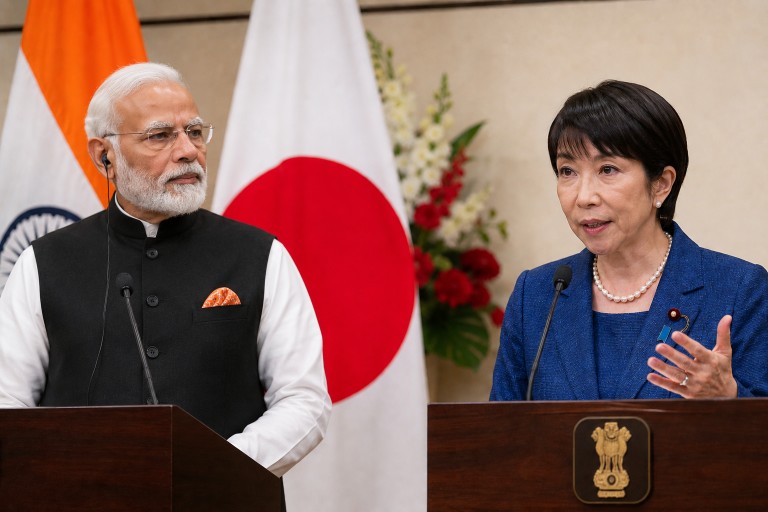
An error in translation led to a misunderstanding during a joint press conference in New Delhi on July 2, where Japanese Prime Minister Sanae Takaichi mistakenly conveyed that Indian Prime Minister Narendra Modi had referred to her as his “beautiful sister.” The Japanese government has since clarified the situation, explaining that the miscommunication stemmed from a relay interpretation error. Modi had initially called Takaichi “my sister” in Hindi, and an official English translation rendered this as “my younger sister.” However, as the translation moved from Hindi to English and then to Japanese, the phrase was inaccurately conveyed as “beautiful sister.”
This translation misstep caused Prime Minister Takaichi to repeat the phrase, under the belief it was correct. During the conference, she expressed sentiments of solidarity, stating that she and Modi had agreed to maintain a sibling-like relationship. The error highlights the complexity inherent in simultaneous relay interpretation, where messages are translated across multiple languages in real-time, increasing the risk of inaccuracies.
Japanese officials have emphasized that this translation error has not impacted diplomatic relations between Japan and India. The incident has been addressed internally, and they have confirmed that India has not raised any issues regarding the mistranslation. The diplomatic ties between the two countries remain stable and unaffected by this incident.
Such occurrences underline the challenges faced in international diplomacy, where language barriers can occasionally lead to misunderstandings. However, both countries appear committed to maintaining their strong relationship, with this incident serving as a reminder of the importance of precise communication in diplomatic engagements.