
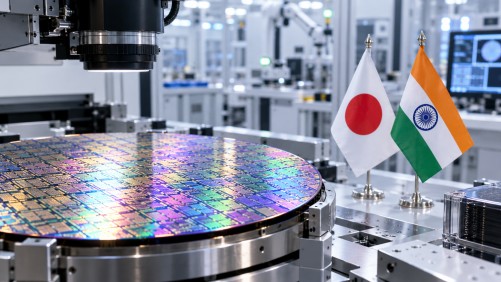
India is increasingly becoming an attractive destination for Japanese semiconductor companies, as the nation seeks to bolster its domestic chip manufacturing capabilities. At Semicon India 2026, held in New Delhi, more than 30 Japanese firms engaged in discussions with Indian counterparts to explore opportunities in investment, technology partnerships, supply chains, and research and development.
With ambitions to emerge as a global semiconductor hub, India is focusing on areas such as chip materials, design, manufacturing, packaging, and testing. The government’s commitment to developing domestic semiconductor infrastructure and expertise is evident, as it aims to address the shortage of workers with specialized skills in this sector.
Japanese companies are actively forging partnerships with Indian enterprises to support this vision. Fujifilm is collaborating with Tata Electronics on advanced semiconductor materials, while Sumitomo Chemical is exploring cooperation in semiconductor material supply chains. Additionally, Enomoto is expected to offer production technology support, indicating a robust synergy between the two nations.
Looking to the future, Tokyo Electron has announced plans to set up a training center in Gujarat by 2027. This facility aims to nurture a new generation of engineers proficient in semiconductor manufacturing equipment, addressing the skills gap in the Indian workforce.
Industry experts highlight that while India boasts a substantial pool of engineering talent, the need for specialized semiconductor skills remains a challenge. The increasing involvement of Japanese companies is anticipated to facilitate technology transfer, enhance workforce development, and strengthen the semiconductor supply chain in India, reinforcing its position in the global market.