
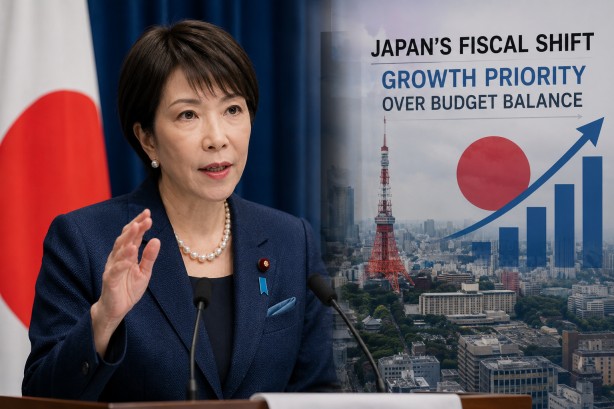
In a notable departure from its traditional emphasis on fiscal consolidation, Japan’s government has introduced a new economic policy aimed at fostering economic growth and ensuring long-term fiscal sustainability. Spearheaded by Prime Minister Sanae Takaichi, the strategy moves away from the singular goal of achieving a primary budget surplus within a year and instead focuses on gradually decreasing the public debt-to-GDP ratio. This approach includes a comprehensive plan to mobilize over ¥370 trillion in both public and private investments by 2040, targeting key sectors such as artificial intelligence.
The policy shift also proposes temporary reductions in food consumption taxes and an increase in defense spending. However, these measures have sparked discussions about potential funding sources. Economists caution that the success of the new strategy hinges on maintaining robust economic growth and keeping interest rates relatively low—conditions that are currently unpredictable.
As Japan embarks on this new economic path, the government intends to set a benchmark that emphasizes debt ratio reduction over short-term budgetary balance. This strategy reflects a broader vision of aligning fiscal policies with long-term economic objectives, particularly in areas that promise future returns, such as technological innovation and national security.
The financial community is keeping a close watch on Japan’s forthcoming budgetary decisions, eager to evaluate whether the proposed spending plans can be harmonized with the overarching goal of fiscal stability. The government’s ability to balance ambitious investments with responsible budget management will be crucial in determining the effectiveness of this policy shift.