
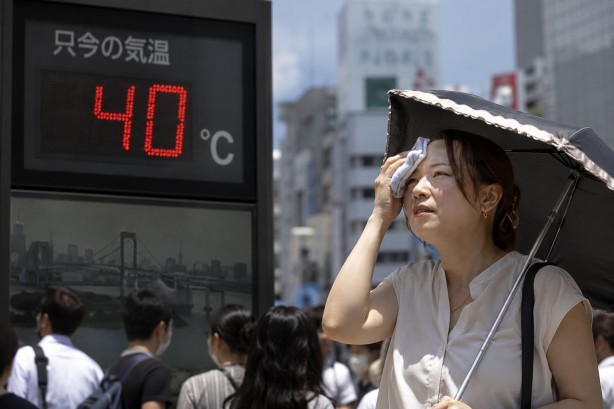
Japan grappled with a severe heatwave on July 21, as a robust high-pressure system sent temperatures soaring past 40°C in various regions. This marked the ninth consecutive year that such intense heat has been documented throughout the country.
This sweltering day was notable as it was the first occurrence of temperatures exceeding 40°C since Japan adopted the term “kokushobi” in April. This term, meaning “cruelly hot days,” is specifically used to describe days when the mercury hits such high levels.
Tajimi, a city in Gifu Prefecture, recorded the peak temperature of 40.3°C, with nearby Gujo reaching 40°C, and Toyota in Aichi Prefecture seeing a high of 40.1°C. By the middle of the afternoon, 255 of the nation’s 914 weather observation stations had reported temperatures of at least 35°C, underscoring the extensive impact of the heatwave across both eastern and western Japan.
In reaction to the extreme conditions, the Environment Ministry, together with the Japan Meteorological Agency, issued heatstroke alerts for 42 prefectures, the largest number of such alerts this year. Authorities strongly advised residents to utilize air conditioning, maintain hydration, and ensure adequate salt intake to ward off heat-related health issues.