
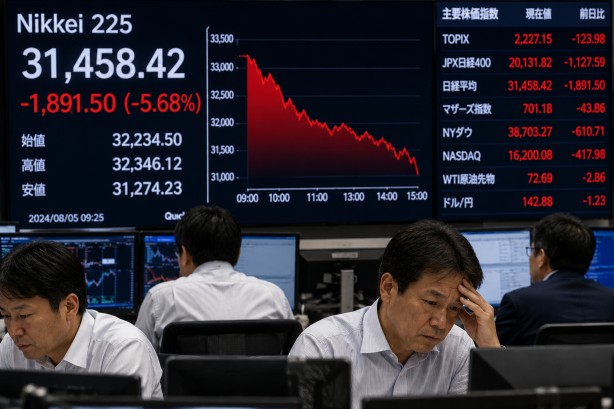
Asian stock markets experienced a significant downturn on Friday, with Japan’s Nikkei 225 index leading the decline. The index plummeted by 5.8%, closing below the 63,000 mark, largely due to a wave of selling in technology and artificial intelligence-related stocks, which sparked investor concern. Other markets in the region also suffered losses, with Taiwan’s market dropping more than 5%, Hong Kong’s Hang Seng index down by 2%, and China’s Shanghai Composite falling by 1.6%. Australia saw a smaller decline, with its S&P/ASX 200 slipping by 0.7%.
The pressure on technology stocks has been mounting in recent weeks, as there is growing apprehension that valuations in the artificial intelligence sector may have escalated too rapidly. This has prompted investors to question the sustainability of demand for advanced chips and memory products, particularly if AI does not fulfill projected profits and productivity improvements.
In the United States, the technology sector also faced setbacks, as evidenced by the Nasdaq Composite’s 1.5% decline on Thursday. Major chipmakers were hit hard, with Nvidia posting a 2.4% drop. Other companies such as Micron Technology, SanDisk, and Western Digital also recorded significant losses, reflecting the broader concerns affecting tech stocks globally.
Amid the turmoil in stock markets, oil prices were on the rise, driven by escalating tensions in the Middle East. This situation has raised alarms about potential disruptions to global energy supplies, particularly through the critical Strait of Hormuz. As a result, Brent crude prices increased by 1.1%, reaching $85.13 per barrel, while US benchmark crude saw a 1.3% rise, hitting $79.95 per barrel.