
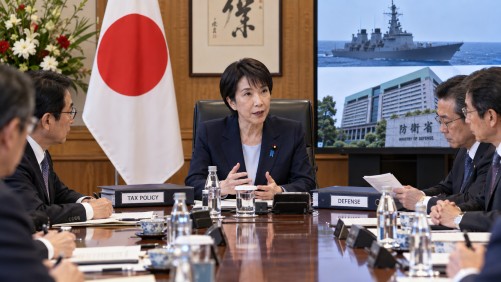
Japan’s political landscape is poised for a significant test as Prime Minister Sanae Takaichi’s newly reshuffled Cabinet prepares to tackle pressing economic, diplomatic, and national security challenges. As the government gears up for an extraordinary Diet session expected in early October, the administration’s focus will be on critical legislative initiatives, including tax reforms and cash assistance measures.
The ruling coalition, comprising the Liberal Democratic Party and Nippon Ishin, will need to navigate a complex political environment, particularly in the Upper House where they lack a majority. This situation underscores the necessity for garnering opposition support to ensure the passage of key legislation. Finance Minister Satsuki Katayama, who has retained her position, will spearhead efforts to implement a reduction in consumption taxes on food items and introduce income-linked cash payments.
In addition to economic policies, the government is also set to address political reforms by pursuing legislation to decrease the number of Lower House seats, a central demand from Nippon Ishin. This move is seen as part of broader reform efforts aimed at streamlining governance and addressing electoral imbalances.
On the international front, Japan’s foreign policy and defense strategies remain pivotal. The retention of Foreign Minister Toshimitsu Motegi and Defense Minister Shinjiro Koizumi signals continuity in managing delicate diplomatic relations with major powers such as China and the United States. With tensions persisting over Taiwan-related security issues, these roles are crucial as Japan seeks to advance its defense policies. Prime Minister Takaichi is expected to engage directly with regional leaders at the upcoming Asia-Pacific Economic Cooperation summit in Shenzhen, China, in November.
National security remains a top priority, with the government aiming to revise Japan’s three key security documents by year-end, including the National Security Strategy. This revision will guide future foreign and defense policies. Concurrently, the administration faces internal debates regarding increased defense spending and its financing, seeking solutions that will not unduly burden the public.
While constitutional reform remains on the agenda, progress has been slow in preparing specific amendment proposals. Nonetheless, Prime Minister Takaichi continues to call for advancements in this area, emphasizing the need for constitutional updates to reflect contemporary challenges.